Monthly Archives: March 2026

The Twist as Generative Principle

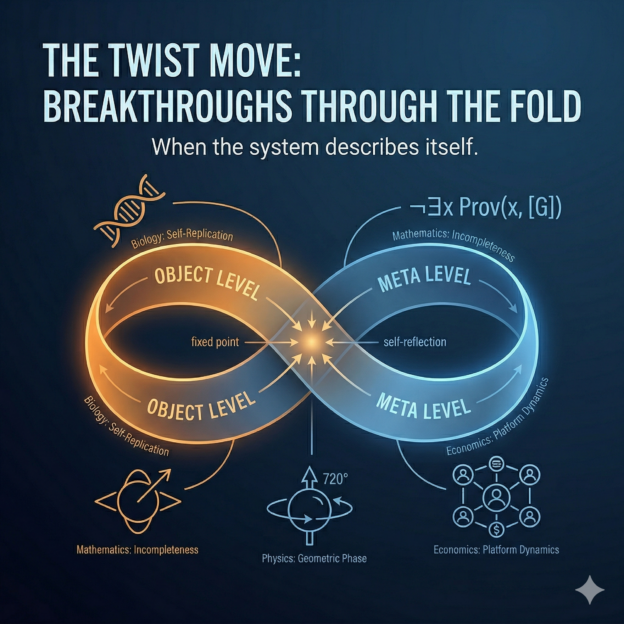
This is the final essay in a series. The first, The Twist Move, describes the operation itself across mathematics, biology, physics, and business. The second, The Twist and the Ground of Being, argues that the consciousness twist is real, that the substrate must support it, and that this tells us something fundamental about the nature of reality.Read More “The Twist as Generative Principle”
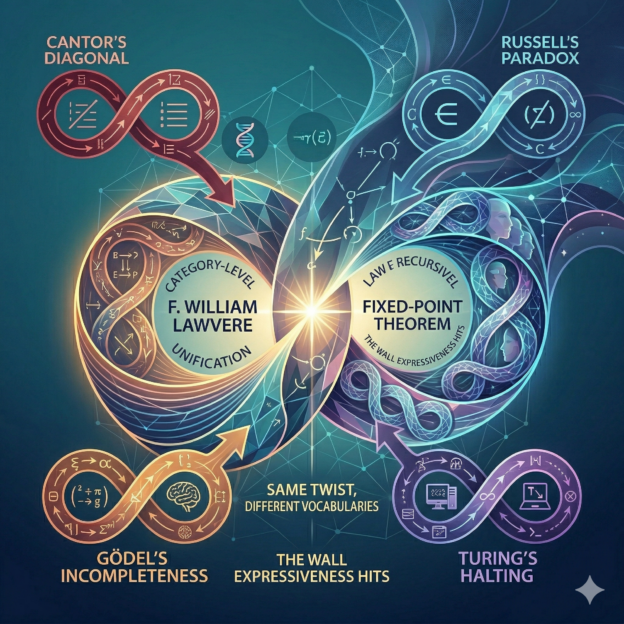
The Theorem Behind the Twist – Lawvere’s Fixed-Point

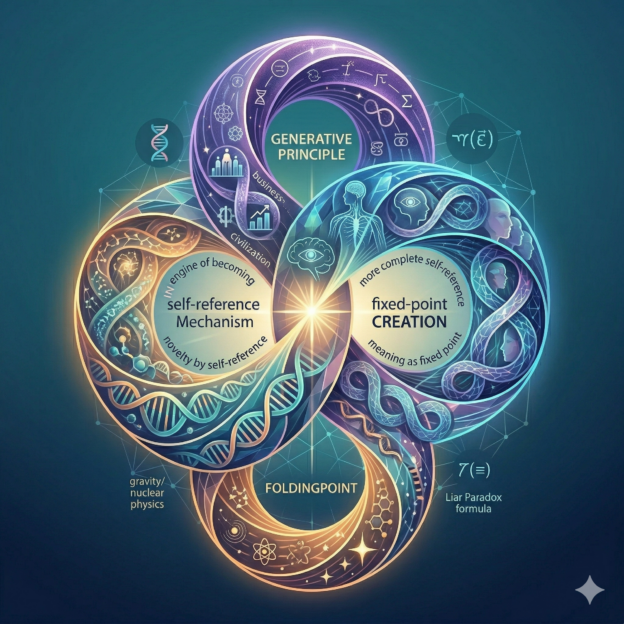
This is the sixth essay in a series. The first, The Twist Move, describes the operation itself across mathematics, biology, physics, and business. The second, The Twist and the Ground of Being, argues that the consciousness twist is real, that the substrate must support it, and that this tells us something fundamental about the nature of reality.Read More “The Theorem Behind the Twist – Lawvere’s Fixed-Point”

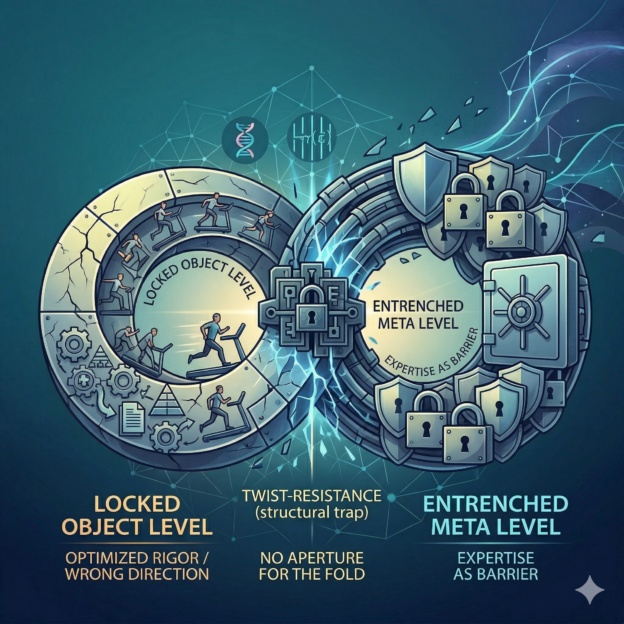
The Twist-Resistant Organization

This is the fifth essay in a series. The first, The Twist Move, describes the operation itself across mathematics, biology, physics, and business. The second, The Twist and the Ground of Being, argues that the consciousness twist is real, that the substrate must support it, and that this tells us something fundamental about the nature of reality.Read More “The Twist-Resistant Organization”

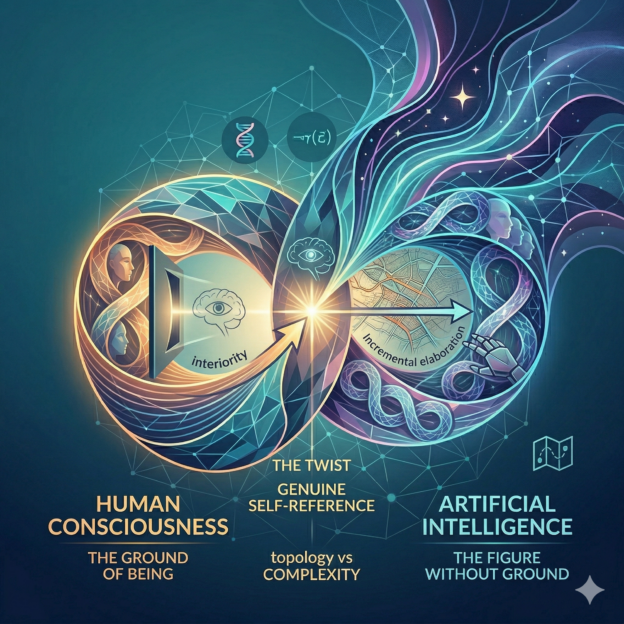
The Figure Without Ground – AI Versus the Twist

This is the fourth essay in a series. The first, The Twist Move, describes the operation itself across mathematics, biology, physics, and business. The second, The Twist and the Ground of Being, argues that the consciousness twist is real, that the substrate must support it, and that this tells us something fundamental about the nature of reality.Read More “The Figure Without Ground – AI Versus the Twist”

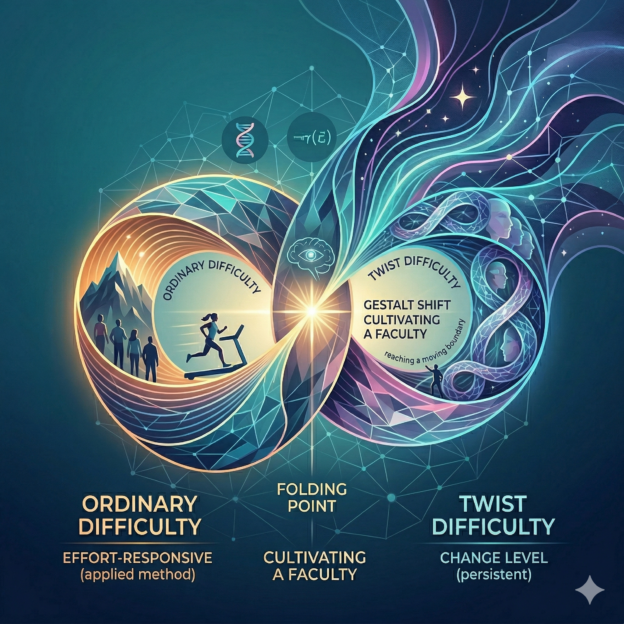
How to Develop Twist Literacy

This is the third essay in a series. The first, The Twist Move, describes the operation itself across mathematics, biology, physics, and business. The second, The Twist and the Ground of Being, argues that the consciousness twist is real, that the substrate must support it, and that this tells us something fundamental about the nature of reality.Read More “How to Develop Twist Literacy”

The Twist and the Ground of Being

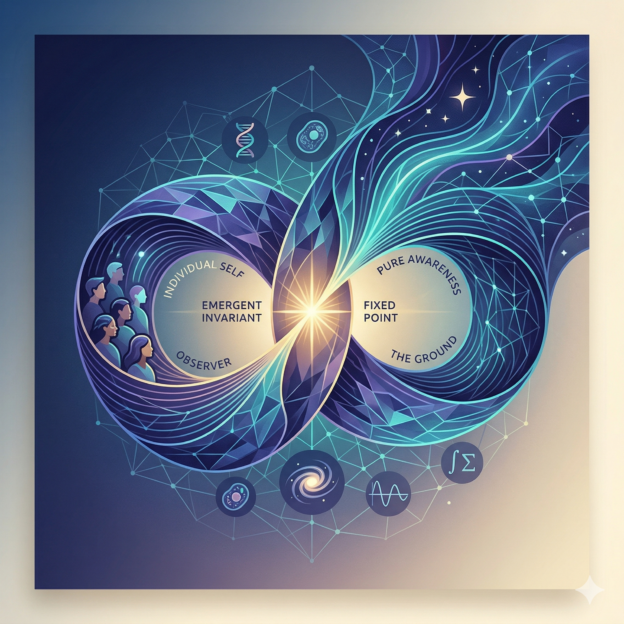
This is the second essay in a series. The first, The Twist Move, describes the operation itself across mathematics, biology, physics, and business. The second, The Twist and the Ground of Being, argues that the consciousness twist is real, that the substrate must support it, and that this tells us something fundamental about the nature of reality.Read More “The Twist and the Ground of Being”

The Internalization of Computation – What Percepta’s transformer-computer actually signals — and why the implications are far stranger than the demo


Something happened two weeks ago that most people filed under “interesting research” and moved on from. They shouldn’t have. Christos Tzamos and the Percepta team published a demonstration in which a transformer executes arbitrary C programs — not by calling out to a Python interpreter, not by emitting code for an external sandbox, but inside its own forward pass.… Read More “The Internalization of Computation – What Percepta’s transformer-computer actually signals — and why the implications are far stranger than the demo”

The Horse Has No Rider: Why Autonomous AI Science Gets It Wrong — And What to Do Instead

We are at a genuinely exciting moment. In the past weeks alone, GPD (Getting Physics Done) has launched with bold promises about AI agents autonomously advancing physics, and Math.Inc has released Gauss, their system for AI-driven mathematical research. The pitch is seductive: deploy swarms of agents, point them at hard problems, and let them run.… Read More “The Horse Has No Rider: Why Autonomous AI Science Gets It Wrong — And What to Do Instead”

The Age of the Navigator: Why AI in Mathematics Changes Everything — and Nothing

Something remarkable happened this week. A human-AI collaboration formally verified Maryna Viazovska’s Fields Medal-winning proof of optimal sphere packing in 8 and 24 dimensions. Math, Inc.’s AI agent Gauss autoformalized the 24-dimensional proof — over 200,000 lines of Lean code — in just two weeks, with no pre-existing blueprint to work from.… Read More “The Age of the Navigator: Why AI in Mathematics Changes Everything — and Nothing”